Understand the shared car park hurdle
Yes, you can usually charge an EV in a Melbourne apartment, unit or townhouse, but a shared building adds steps a house does not. The car park, its wiring and the main switchboard are often common property, so the owners corporation generally needs to agree before anyone runs a circuit to your bay.
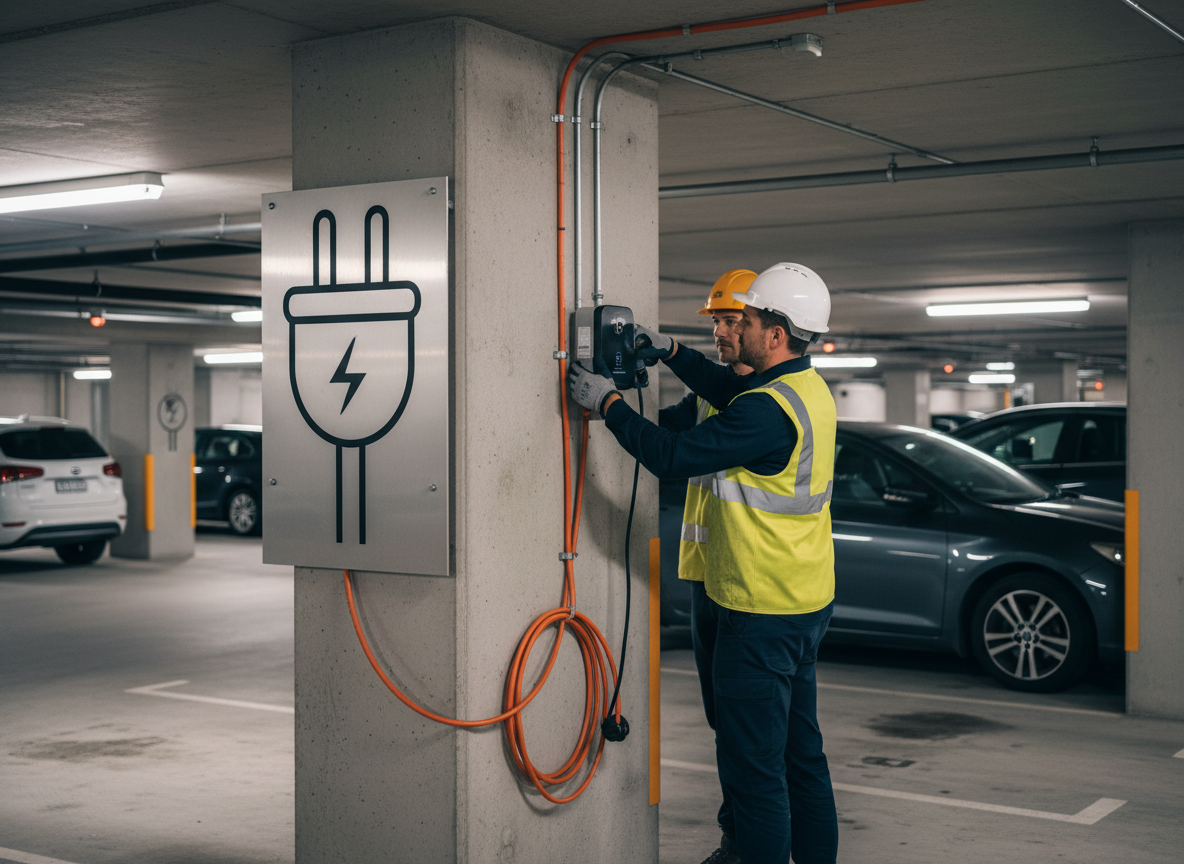
A working charger bay in the basement
The goal is a wall charger mounted at your allocated space, fed from a circuit that is metered so the energy is billed to you rather than shared among every lot. In basements with many spaces, the cable route from the supply to the bay often sets the scale of the job.
How owners corporation approval and metering work
Most committees want to know where power will come from, how usage will be measured and who pays for it. Some buildings choose a shared plan covering several bays at once, so asking early whether other residents want chargers can save each owner paying for a separate cable run.
Why load management drives the decision
A building supply is sized for lifts, lights and apartments, not dozens of cars charging at once. Load management shares capacity between chargers and slows them when demand peaks, which can avoid a costly supply upgrade. Larger jobs may also need sign-off from the local distributor, such as CitiPower, Jemena or United Energy.
Renters and committee members
Renters can still ask: the landlord and the owners corporation both need to agree, and a written request explaining the charger, the circuit and who covers the cost makes approval easier. Committee members weighing several requests may find a building-wide plan fairer than approving one bay at a time.
Safety paperwork for a car park charger
Once the charger is wired, the installing electrical contractor must give you a Certificate of Electrical Safety, and prescribed work needs an independent inspection before it is energised. Sharing a copy with the owners corporation gives the building a record of the work done on common property.
Your next step in a shared car park
Check whether your space is allocated or on title, find where the nearest common switchboard sits, and ask the committee secretary whether an EV policy already exists. Note the building type and how many residents might want charging too, since that shapes whether a single circuit or a shared system makes sense.
Apartment EV Charger Installation Services We Offer
✓Single Bay Charger for an Apartment Owner
A dedicated charger at one allocated space, wired and metered so the energy is billed to that lot.
✓Shared Charging for Townhouse and Unit Complexes
Chargers for several car spaces in a smaller complex, with load management sharing the available supply.
✓Building-wide Planning for Committees
A staged plan for the whole car park so future bays can be added without new cable runs each time.
How it works
- 1
Raise it with the owners corporation
Talk to the committee or strata manager and ask about any EV policy, bylaws or existing plans for the car park.
- 2
Site assessment of supply and route
A licensed electrician checks the building supply, switchboard capacity, cable path and where the charger would mount at your bay.
- 3
Approval and metering plan
The proposal covering metering, load management and any network sign-off goes to the owners corporation for a decision.
- 4
Installation and certificate
The charger is installed, tested and, where required, inspected before it is energised, then you receive the safety certificate.